


 Cart
Cart
 sales@molnova.com


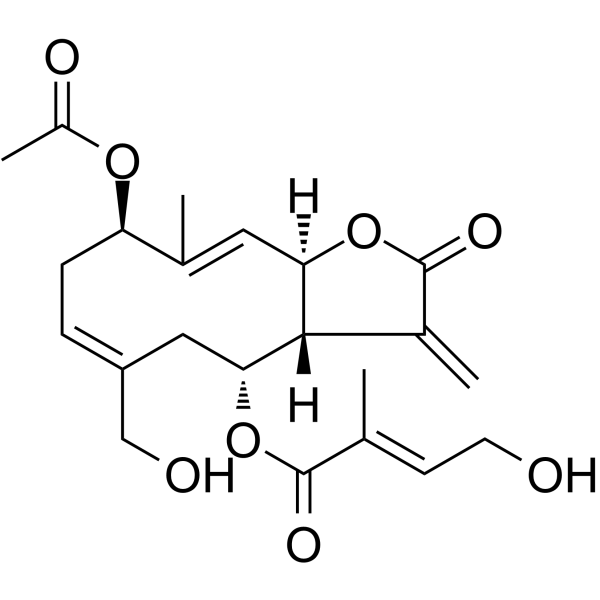
Eupalinolide H
CAS No. 1402067-83-7
Eupalinolide H( —— )
Catalog No. M32257 CAS No. 1402067-83-7
Eupalinolide H, a sesquiterpene lactone, has the potential to be used as natural anti-inflammatory agent.
Purity : >98% (HPLC)
 COA
Datasheet
HNMR
HPLC
MSDS
Handing Instructions
COA
Datasheet
HNMR
HPLC
MSDS
Handing Instructions
| Size | Price / USD | Stock | Quantity |
| 5MG | 410 | In Stock |


|
| 50MG | Get Quote | In Stock |
|
| 100MG | Get Quote | In Stock |
|
Biological Information
-
Product NameEupalinolide H
-
NoteResearch use only, not for human use.
-
Brief DescriptionEupalinolide H, a sesquiterpene lactone, has the potential to be used as natural anti-inflammatory agent.
-
DescriptionEupalinolide H, a sesquiterpene lactone, has the potential to be used as natural anti-inflammatory agent.
-
In VitroEupalinolide H (2.5, 10, 40 μM) has significant inhibitory effects on IL-6 and TNF-α production in in RAW 264.7 cells.
-
In Vivo——
-
Synonyms——
-
PathwayOthers
-
TargetOther Targets
-
Recptor——
-
Research Area——
-
Indication——
Chemical Information
-
CAS Number1402067-83-7
-
Formula Weight420.45
-
Molecular FormulaC22H28O8
-
Purity>98% (HPLC)
-
SolubilityDMSO, Pyridine, Methanol, Ethanol, etc.
-
SMILES——
-
Chemical Name——
Shipping & Storage Information
-
Storage(-20℃)
-
ShippingWith Ice Pack
-
Stability≥ 2 years
Reference
1.Nat Prod Res . 2019 Feb;33(4):477-485
molnova catalog



related products
-
Oxyntomodulin (human...
Oxyntomodulin (human, mouse, rat) (Proglucagon (33-69)) is a product of the glucagon precursor. Oxyntomodulin (human, mouse, rat) contains the entire glucagon sequence plus a C-terminal octapeptide, comprising in total 37 amino acids.
-
Obtusifolin
Obtusifolin has antioxidant properties and improves chemically induced diabetes and its complications by modulation of oxidative stress.
-
Shield-1
Shield-1 is a specific, high-affinity and cell-permeant ligand of FK506-binding protein-12 (FKBP), and reverses the instability by binding to mutated FKBP (mtFKBP), allowing conditional expression of mtFKBP-fused proteins. Shield-1 can stabilize the entire fusion protein.
